
Luxury Factory Outlet: The Manufactured Bargain
How fashion turned factory rejects into a retail empire and made feeling clever part of the price.
The old factory outlet was an architectural confession: the factory had made too much, or something had come out slightly wrong, and here was the evidence. I associate that world with Italy in the 1990s, with places like Prato and the possibility of finding genuine PRADA rejects at a serious discount. The bargain had a material explanation. A defect, an unsold season, a commercial miscalculation: something had happened to the object, and the price acknowledged it. The word “reject” was reassuring. It suggested that somebody, somewhere, still had standards.
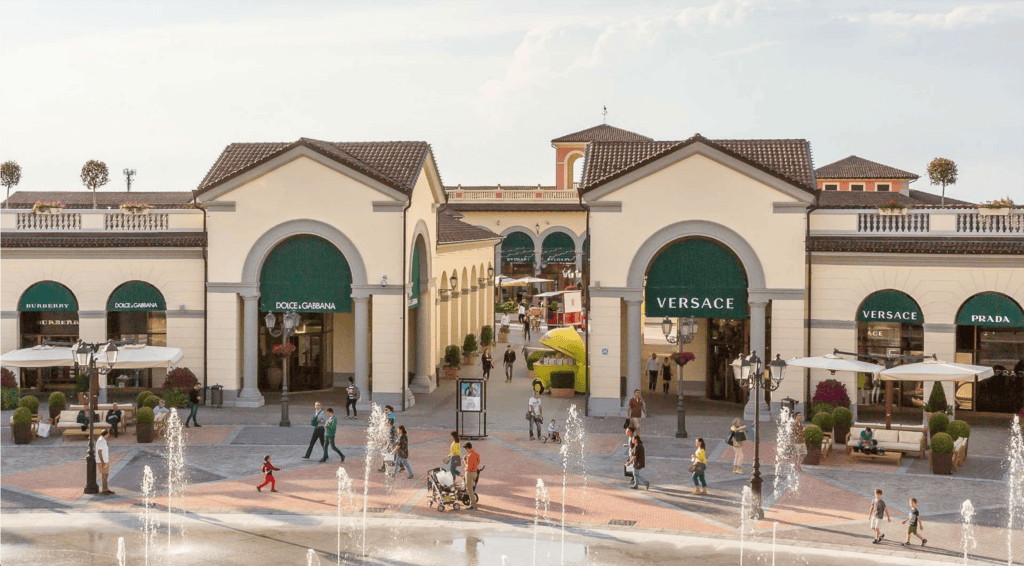
The fountains are real; the savings deserve a closer look.
A few years ago, a friend recommended a new outlet mall in Pattaya, praising its architecture and layout. I went to have a look. What I found felt like ordinary merchandise from mid-range fashion brands, without the discounts I had expected. My friend had recommended a piece of architecture; I had assumed the word “outlet” referred to the prices. We had apparently visited the same building for entirely different reasons.
From surplus to strategy
The American factory outlet began with apparel and shoe manufacturers selling excess or damaged goods to employees, then to the public. Anderson-Little opened outlets away from its factories in 1936. In 1974, Vanity Fair brought multiple stores together in Reading, Pennsylvania. The pipe for letting out unwanted inventory had become a destination.
The attraction of scaling that destination was obvious. The difficulty was that genuine leftovers make unreliable tenants. They arrive in awkward sizes, unpredictable quantities, and colors that have already exhausted their argument. A 2004 survey published through INSEAD noted a shift from short outlet leases to seven- to ten-year commitments. A decade of rent complicates the story of a temporary home for unfortunate trousers. The outlet had become a planned sales channel. Even the unforeseen was now expected to turn up regularly.
The reject enters production
The convenient solution is to manufacture merchandise specifically for the outlet. Consumers’ Checkbook cites retail analysts’ estimates that 80–85 percent of goods offered at outlets are made specifically for that market. These products can differ from regular-store merchandise in fabric, construction, and hardware. The famous name survives; the specifications may have been revised to suit the occasion.
An outlet collection can be perfectly legitimate. It cannot automatically offer the same bargain as a genuinely reduced original retail product. A garment built from the outset for a lower price has never suffered the commercial misfortune its surroundings invite us to imagine. It has arrived exactly where it was intended to go. The customer thinks they are rescuing it from corporate neglect. The corporation has been expecting them all along.
This is the modern outlet's more interesting achievement. Fashion has learned to manufacture the merchandise and the feeling that we have discovered it by accident. A loophole with a tenant directory and a marketing department is beginning to look suspiciously like the system.
The arithmetic of the phantom discount
The price tag completes the story. At its most theatrical, it announces a permanent emergency: 50 percent off, 70 percent off, a last chance that appears to have been granted a long lease of its own. The larger number establishes the object’s supposed importance. The smaller one congratulates us on being here at the right moment.
“Compare at” is a particularly accommodating phrase. It can suggest a former selling price without establishing that this particular item ever commanded it. California’s attorney general warns that the comparison may involve an item never sold at that higher price, or a different, higher-quality version. The garment has acquired a distinguished past without the inconvenience of having lived it.
The saving can therefore depend on the history the shopper supplies. We begin calculating what we have saved before deciding what the object is worth. A purchase we had no intention of making becomes evidence of financial discipline, made possible by treating the larger number as money we somehow already possessed. The cash register records an expenditure. We leave with a small certificate of virtue.
The village is part of the price
An attractive setting helps keep the arithmetic from becoming the entire conversation. The outlet offers an excursion, with places to eat and an agreeable route between purchases. In her 2007 account of European outlet villages, Amy Cortese of The New York Times described chef-run dining, carefully cultivated surroundings, and staff who help tourists with VAT refund forms. The discount had acquired hospitality.
This is what the magnificent retail term “shoppertainment” accommodates: enough additional activity to make shopping feel like a day out. In a purpose-built outlet village, a place whose history begins with a leasing agreement, the scenery serves a garment whose retail history begins with a comparison price. Both carry an air of something inherited.
My friend in Pattaya had understood the destination perfectly. I was still looking for the bargain, which had become an amenity and was apparently unavailable that afternoon. By then, however, we had traveled, walked around, and made an occasion of it. Returning empty-handed can begin to feel like a failure to participate. The shopping bag offers a convenient certificate that the excursion was worthwhile.
Luxury on permanent clearance
Luxury has its own reasons to appreciate this arrangement. Genuine unsold stock needs somewhere to go without making the flagship look as though it has misjudged the public. The outlet provides a controlled setting where a markdown can stay a respectable distance from the main performance.
LOUIS VUITTON declines the public markdown altogether: the house says it never discounts and has no outlet stores. ChHANEL’s history offers a more brutal form of price protection: a Hong Kong court case exposed handbags and wallets earmarked for shredding in 2017, although the company now says unsellable products go through L’Atelier des Matières for recycling. The bag could lose its right to exist before the brand lost its right to charge full price.
At the same time, separate product ranges allow a brand to sell different customers flattering accounts of their place in its world. The boutique customer can enjoy the ceremony of paying full price. The outlet customer can enjoy the intelligence of having avoided it. The brand collects from both. One customer has demonstrated that money is no obstacle. The other has demonstrated that nobody takes them for a fool. Conveniently, both demonstrations require a purchase.
Follow that logic far enough, and the luxury system starts to resemble a permanent global clearance sale, where everything is perpetually marked down because nothing ever held intrinsic value to begin with. The grandeur belonged to the pricing story, and the story can be rewritten whenever another customer needs persuading. A brand can cultivate rarity in one postcode while pursuing volume in another, leaving the logo to reconcile the contradiction.
Manifesto for the disillusioned
I recognize the bargain hunter in this story very well. Part of the pleasure of a find is the suspicion that you know something other people have missed. Real bargains exist in outlets, and a product made for one can be worth its asking price. The objection is to an industry that makes it needlessly difficult to see the difference between a product built to cost less and the same product reduced in price.
Fashion has taken its leftovers, the least glamorous evidence of its own fallibility, and turned them into another venue for aspiration. Surplus can be dressed as discovery. A separate product line can borrow the romance of a rescue. Even the reject has been cast, styled and distributed.
The standard should be simple: the object, the price, and the story should agree. I still like the idea of a PRADA reject, and I would prefer the flaw to be in the garment rather than the arithmetic. The old outlet let us benefit when the fashion system made a mistake. The new one has figured out how to charge admission for the feeling it has.